For many fans, the image of a professional athlete is built on glamour. The tunnel fit. The sold-out arena. The endorsements. Antonio Davis offered a much different view.

Speaking in Life After the Game: An Intimate Conversation with Antonio Davis, moderated by Robert Davidman, Davis made it clear that the public often misses what life as a player actually feels like. “People fail to realize the human side of athletes,” he said. He described getting married, starting a family, buying a house, and building his basketball career all within 18 months as a young adult. Practices, film, workouts, travel, recovery, and family life were all stacked on top of each other. As Davis put it, one of the biggest misconceptions is that players have all this free time and no real stress off the court.
Davis was not asking for sympathy. He was explaining that athletes are still people, and for many of them, especially non-superstars, life in the league is less about celebrity and more about growing up fast under pressure. Even while living out a dream, it can be hard to enjoy the experience when every day demands so much.
That pressure naturally led into one of Davis’s bigger points: what it actually takes to survive and succeed at that level. Everyone in the NBA is talented. What players often take the most pride in, and what truly separates them, is their mental discipline. Davis drew a clear distinction between skill and mentality, explaining that when the stakes rise, talent alone is not enough. He admitted there were moments in his own career when, down two in a playoff game, he did not want the ball, while someone like Reggie Miller would be begging for it. To him, that was the difference. “You can’t always practice this, you have it or you don’t.” He made a similar point with Kobe Bryant, saying that if he practiced eight hours, Kobe practiced ten.
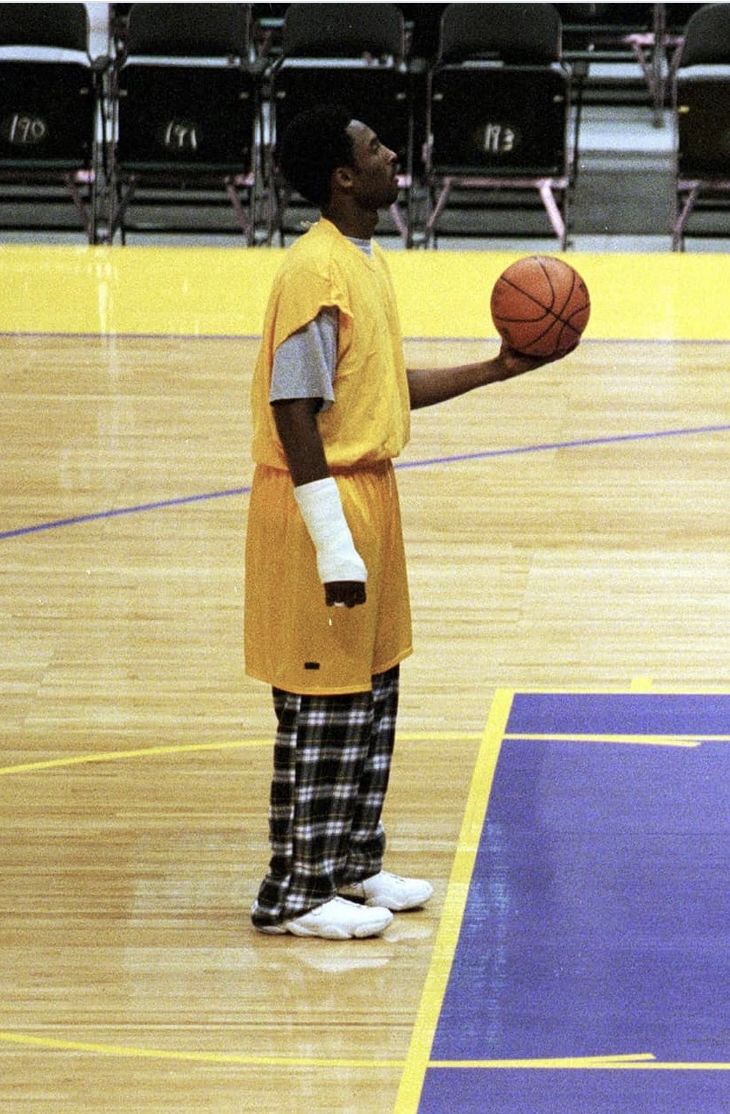
It is a revealing point because it shows how thin the margins really are at that level. The Brian Scalabrine quote fits well here: “I’m closer to LeBron than you are to me.” It is a funny line, but it gets at the same truth Davis was describing. Talent is just the first level. What makes someone elite is mentality, discipline, and the willingness to go further than the next guy.
From there, Davis moved into a conversation about integrity as a player. When asked for a player’s perspective, he was blunt: “It’s hard to fathom anyone I played with wouldn’t try to win at all costs.” That answer said a lot about the standards he associates with his era. Older players often view today’s NBA differently, and Davis pointed to how much more physical the game once felt, saying you “couldn’t run through the paint without being tapped.” In his eyes, he had the utmost respect for the players he shared the floor with because they all brought everything they had.
Sports now exist inside a much different ecosystem than they did when Davis played. Athletes are tied to sportsbooks, prediction markets, and brand campaigns. Giannis Antetokounmpo’s recent stake in Kalshi and LeBron James’s DraftKings ambassador role show how normal gambling-adjacent partnerships have become for modern stars.
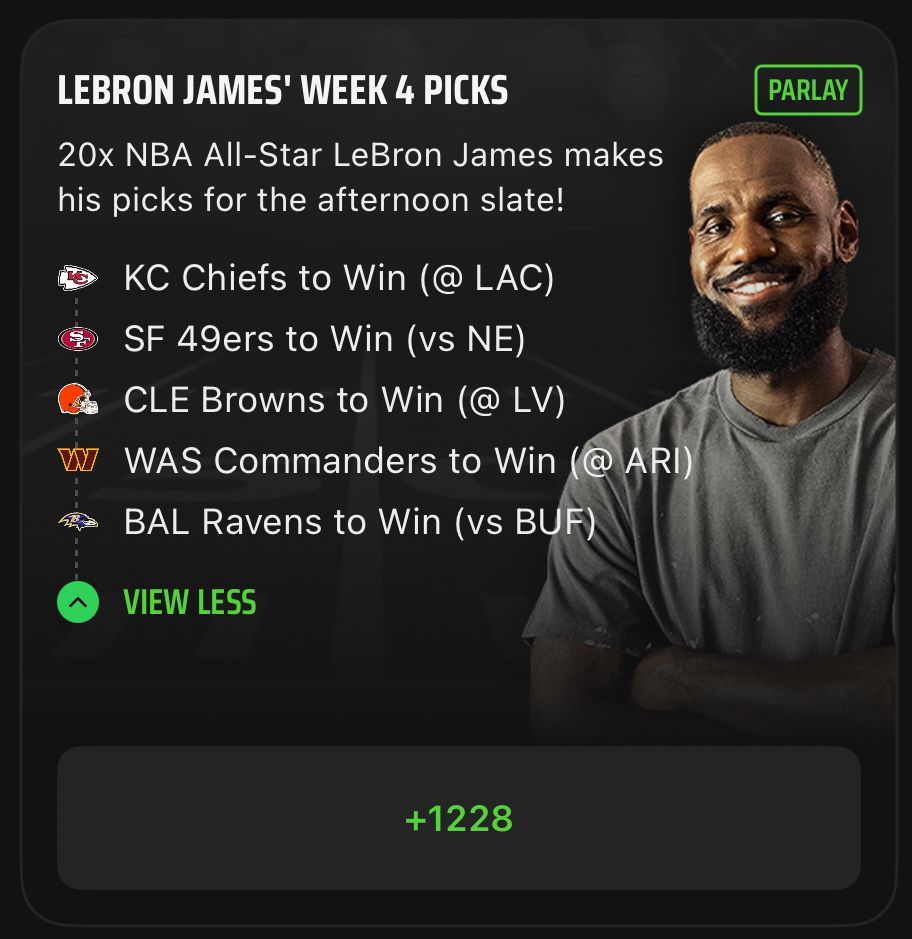
That, by itself, is not what Davis was criticizing. Players like LeBron and Giannis are not betting on basketball. The larger point is that as basketball and gambling become more closely linked, the possibility of gambling-related issues feels like a natural risk.
In fact, the darker side of that world has become harder to ignore. Jontay Porter was banned by the NBA after the league found that he disclosed confidential information to bettors, bet on NBA games, and limited his own participation for betting purposes. Terry Rozier was later charged in a federal case alleging he provided nonpublic information so bettors could profit from wagers on his statistical unders, though those remain allegations in an ongoing criminal matter. Gilbert Arenas was also charged in 2025 in a separate federal case tied to an alleged illegal gambling business, another sign of how frequently basketball and gambling have collided in the public eye.
That is why Davis’s comments land with so much force. He was not pretending gambling does not exist, and he was thoughtful in acknowledging that sports can now be consumed in a “fun and entertaining” way through betting and adjacent products. But he also made clear that he would never bet on basketball himself. He knows the sport too intimately to comfortably view it that way. For players from his generation, the game meant too much to risk disrespecting it. Hopefully, younger players can learn from that, because they worked just as hard to get there. Davis added some comedic relief, saying he would still bet on football, especially as a Raiders fan.
Maybe that is part of why leaving the game can be so difficult. When you have poured that much effort, discipline, and integrity into something, and done it the right way, walking away means losing far more than a job.
When the conversation shifted to life after the league, it reached its emotional center. Leaving basketball was hard. Davis talked about crying without always understanding why, and about being open to therapy as he tried to understand who he was after the game. Players do not always leave basketball cleanly when it has shaped their lives for so many years. Davis came to the conclusion that “with the loss comes rediscovery.” There was more ahead for him, but it would take time, therapy, and opportunity.
He even found humor inside that pain, joking about being haunted by the famous four-point play in Game 3 of the 1999 Eastern Conference Finals, when he fouled Larry Johnson on one of the signature moments of the Knicks’ Finals run. Davis showed a strong sense of self-awareness and learned to see himself as more: a father, a pillar of the community, and someone who could help others. After finding his own second life, he wanted to help others find theirs too.
The strongest line of the event came when Davis explained the gap between stars and everyone else. High-level players, he said, often get opportunities in other rooms to reimagine their lives. The other 400 players do not get to reimagine. That is the part of the athlete story people rarely sit with. Superstars often leave the game with platforms already waiting for them, while everyone else has to build a new life from scratch.
Davis’s work with the National Basketball Retired Players Association is built around helping people do exactly that by creating services, connections, and opportunities that let former players apply the same discipline they once gave to basketball to a new craft. The league may stop calling, but the work ethic does not disappear.
To close the conversation, Davidman asked an important question: why is it so important for athletes to tell their own stories instead of letting the media define them?
Davis’s answer brought the entire discussion full circle. Athletes need to tell their own stories instead of letting the media flatten them into caricatures. The public sees the highlights, controversies, contracts, and style. What it often misses is the responsibility, the discipline, the grief, the integrity, the person underneath, and the long process of figuring out who you are when the game is finally over.
